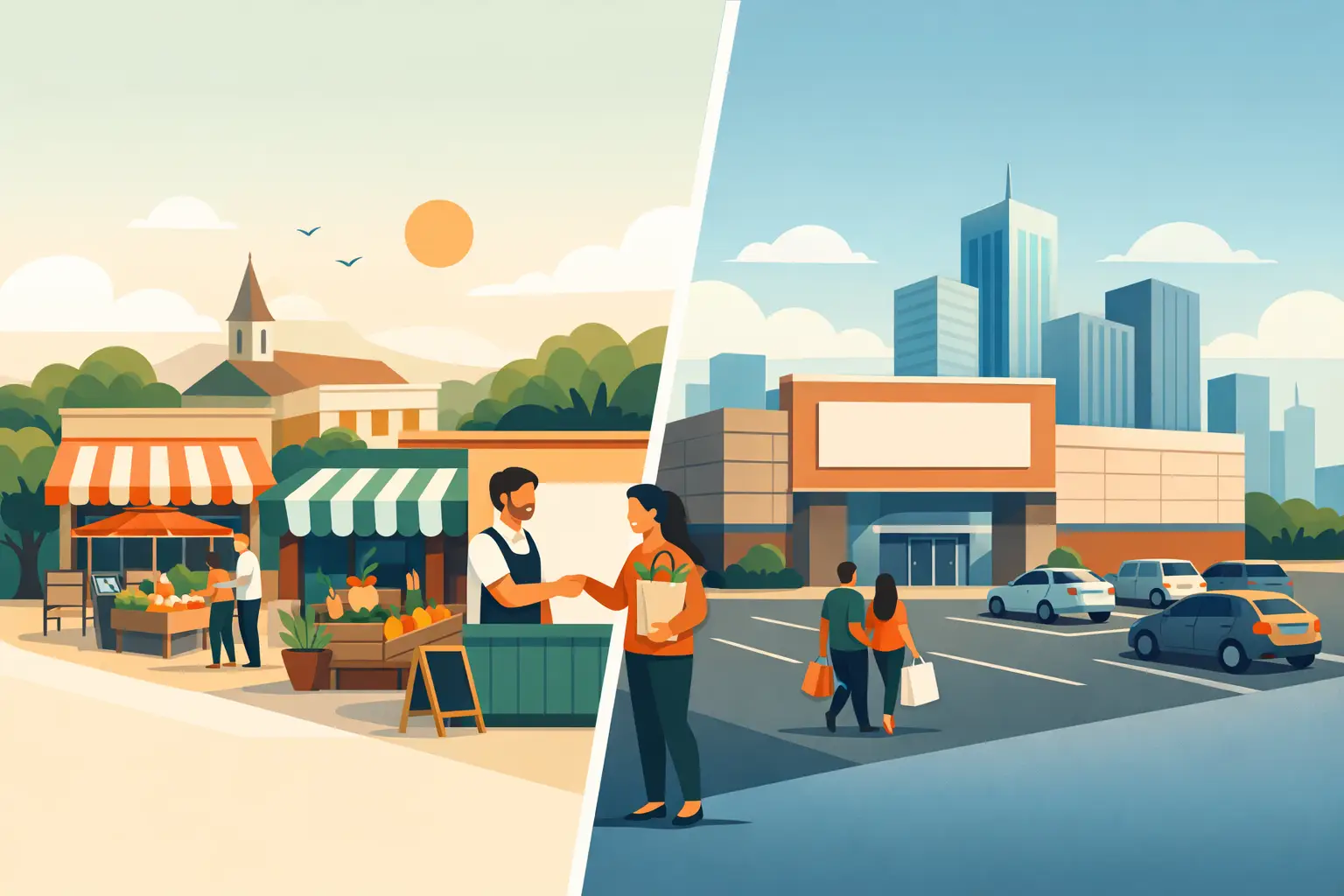
A familiar storefront goes dark, and the loss is bigger than one empty window. It may mean fewer jobs for neighbors, fewer gathering places, and one less owner who knows customers by name. When we choose to shop local instead of chains, we make a practical decision with a personal impact: we help the businesses that give a neighborhood its character stay open, visible, and ready to serve.
Independent businesses are not asking for a handout. They are asking for a fair chance to be found and chosen in a marketplace where national brands have enormous advertising budgets, prime search placement, and name recognition already built in. Local spending is one way communities can give that chance.
Local Dollars Do More Close to Home
A dollar spent at an independent business does not simply disappear into a distant corporate system. It helps cover wages for local employees, payments to nearby vendors, taxes that support community services, and purchases made by the owner right here in town. That circulation matters.
A local restaurant may buy ingredients from a regional farm. A neighborhood hardware store may sponsor a Little League team. A family-run locksmith may hire a recent graduate and give them their first steady job. These decisions are not always visible at the register, but they shape the community around us.
Chains employ people and can serve a real purpose, especially in areas with limited options or when a shopper needs a specific product fast. The point is not that every chain is bad or that every local business is automatically the best fit. The point is that independent businesses deserve consideration before convenience becomes our only deciding factor.
Shop Local Instead of Chains for Real Connection
Local business owners have a stake in the place they serve because they live with the results. They see their customers at school events, on sidewalks, at places of worship, and across the counter week after week. That creates a different kind of accountability.
When an owner knows your name, remembers your usual order, or takes time to explain a repair, it is not just good service. It is a relationship built over repeated moments of trust. Those moments are harder to measure than a discount code, but they matter when people want to feel recognized rather than processed.
Your place has a story, and so does the business you visit. The bookstore owner who curates recommendations, the mechanic who explains what can wait, and the baker who opens before sunrise are all building something more durable than a transaction. They are building local trust.
Small Businesses Keep Neighborhoods Distinct
A main street filled with independent shops tells visitors and residents something meaningful about a community. It says there is room for creativity, craft, and ambition. It gives people a reason to walk around, linger, and return.
Chains often offer predictability. There is value in knowing what to expect when traveling or shopping under time pressure. But predictability can become sameness when it is the only option left. Local businesses bring the items, flavors, services, and experiences that cannot be copied from one location to another.
That difference also strengthens a business district. A shopper who comes in for coffee may browse a nearby gift shop. A customer visiting a local pet groomer may discover an independent florist next door. One visible small business can help create momentum for others.
Visibility Is Part of the Fight
For many small business owners, the challenge is not quality. It is discoverability. A great local restaurant can lose customers simply because it does not appear when someone searches for lunch nearby. A skilled home service provider can be overlooked because their online listing is incomplete, outdated, or buried beneath large advertisers.
That is why a strong online presence is no longer optional. Accurate hours, clear categories, current photos, contact information, and customer-friendly descriptions make it easier for local shoppers to act on their good intentions. If people cannot find a business, they cannot choose it.
iLocal Mainstreet exists to give independent businesses a dedicated place to be discovered, without putting them in a lineup dominated by big-box stores and faceless chains. For an owner, claiming and maintaining a profile is a straightforward way to tell customers: we are here, we are open, and we are part of this community.
How Consumers Can Make Local a Habit
Supporting local does not require spending every dollar at a small business. It starts with a few deliberate choices. Before placing a routine order online, ask whether a nearby shop carries it. Before booking a service, look for an independent provider in your area. Before choosing a familiar chain for dinner, consider the restaurant that has been serving your neighborhood for years.
The easiest local habits are often the ones tied to regular needs. Buy birthday gifts from a neighborhood retailer. Order takeout from a family-owned restaurant once a month. Choose a local accountant, barber, repair shop, or landscaper when their services fit your needs. Recommend a business after a good experience, because word of mouth still carries real weight.
Patience helps, too. An independent shop may not have unlimited inventory, overnight shipping, or a corporate call center. In return, customers may find thoughtful advice, specialized products, flexible service, and the satisfaction of knowing where their money went. The trade-off will not work for every purchase, but it is worth considering more often.
What Business Owners Can Do Right Now
Local loyalty grows when customers can quickly understand what makes a business worth choosing. Owners do not need polished corporate language to communicate that. They need clarity and consistency.
Start with the basics: make sure your business name, phone number, address, hours, and service area are correct wherever customers search. Then explain what you do in plain language. A customer should be able to tell within seconds whether you offer the product, meal, repair, or service they need.
Make your local story visible, too. Share what you specialize in, how long you have served the area, and why the work matters to you. Mention the details that make your business different, whether that is custom work, family recipes, same-day repairs, locally sourced goods, or decades of experience. People cannot support what they do not understand.
Just as important, invite customers back. Thank them for choosing local. Ask for reviews after a positive visit. Encourage them to tell a neighbor. These are small actions, but small businesses are often built through hundreds of small, human moments.
A Stronger Main Street Is a Shared Choice
Communities do not keep their independent businesses by accident. They keep them through everyday choices by shoppers, business owners, landlords, civic leaders, and neighbors who believe a thriving main street is worth protecting.
The next time you need something, pause before defaulting to the biggest name on the screen. Search nearby. Step inside. Ask a question. Allow a local business to earn your trust, then help others find it when it does. That single choice can keep a story, a job, and a neighborhood tradition moving forward.