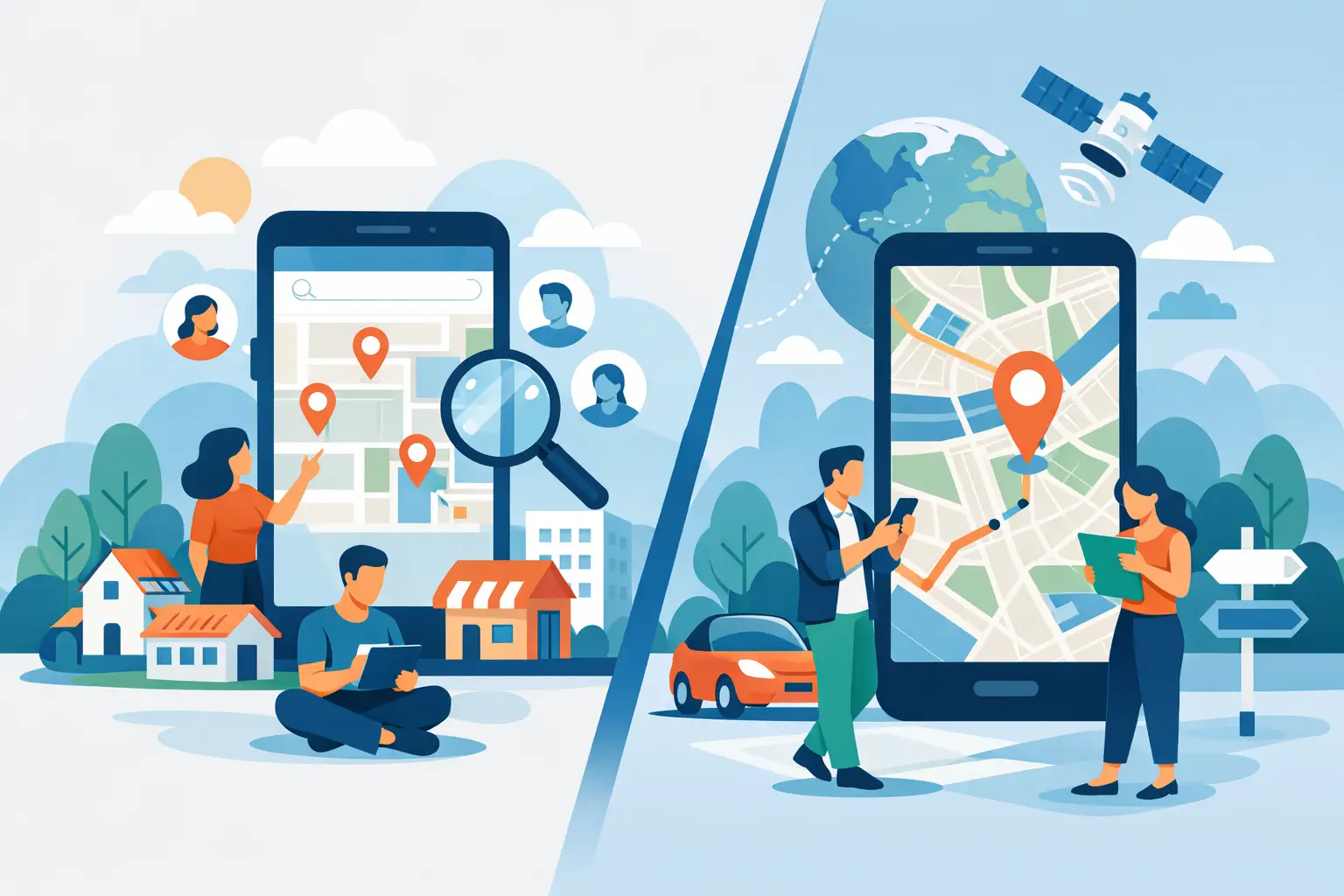
A customer searches for a bakery near them, and the screen fills with pins. Your family-owned shop may appear beside a supermarket bakery, a national coffee chain, and a delivery app that has never kneaded a loaf of bread. That is the real question behind community directory versus Google Maps: not which tool exists, but where independent businesses get a fairer chance to be seen.
Google Maps is part of how people move through daily life. A community directory serves a different purpose. It gives people a place to look specifically for the neighborhood businesses they want their dollars to support. For a small business owner, the strongest answer is usually not choosing one over the other. It is understanding what each channel can do, then showing up well in both.
Community Directory Versus Google Maps: The Core Difference
Google Maps is a broad, public search platform. It helps people find nearby places, check hours, get directions, read reviews, and make quick decisions. It is built for scale. That means an independent florist can be listed alongside a national retailer, a warehouse-style chain, and sponsored results that appear above organic local options.
A community directory is built around intent and belonging. Visitors are not simply asking, “What is closest?” They are often asking, “Where can I find a local business?” The directory can organize results by neighborhood, category, and the kinds of businesses people want to discover, such as independent restaurants, repair shops, boutiques, and service providers.
That distinction matters because proximity is not the same as preference. A customer may be willing to drive a few extra minutes for a local bookstore, a family-run diner, or a trusted neighborhood plumber. A community-focused directory makes that choice easier.
What Google Maps Does Well
For most local businesses, Google Maps is a basic visibility tool. When your address, phone number, website details, hours, and categories are accurate, you are easier to find when someone needs you right away. A person searching “shoe repair near me” or “lunch near me” is likely using Google Search or Maps first.
Maps is especially valuable for high-intent, immediate needs. Someone with a flat tire, a craving for tacos, or a broken phone is often looking for the closest open option. Clear hours, current photos, recent reviews, and accurate directions can turn that search into a visit.
It also provides a familiar experience for customers. People know how to use it, and they trust its basic tools for navigation and contact information. Ignoring Google Maps can leave a business hard to find at the exact moment a customer is ready to act.
Still, Google Maps comes with trade-offs. Search results change. Competition is crowded. Larger brands may have more reviews, bigger marketing budgets, multiple locations, and teams dedicated to managing their online presence. Even when your business offers more care, more character, and better local knowledge, those qualities do not always fit neatly into a map result.
Where a Community Directory Changes the Conversation
A community directory does not need to replace Google Maps to be valuable. It creates a separate lane where independent businesses are the point, not an afterthought.
For shoppers who care about local ownership, a directory removes the guesswork. They do not have to sort through chains to find a neighborhood restaurant. They can look for businesses with real roots in the community and stories behind the storefront. That makes discovery more meaningful, especially in categories where personality and trust matter.
For business owners, this kind of visibility can feel more aligned with the work they have put into their community. Your business is not just another pin. It is a place where neighbors gather, where first jobs happen, where regulars are remembered, and where spending supports local families.
iLocal Mainstreet is built around that idea: big visibility for small businesses, without placing big-box stores and faceless chains at the center of the experience. For an independent owner, that focus can make a listing more than a digital placeholder. It can invite local-minded customers to choose your door.
Discovery With Values Attached
Some customers choose the fastest option. Others want the fastest option that still reflects what they care about. A community directory speaks to that second group.
These shoppers may be searching for a gift with local character, a restaurant that feels personal, or a service provider who understands the area. They want convenience, but they also want confidence that their purchase helps keep a neighborhood distinctive. A well-managed directory profile gives them the details they need to act: what you offer, where you are, how to reach you, and why your business is worth choosing.
That is not charity. Independent businesses earn loyalty through quality, service, and relationships. A community directory simply helps more people discover the choices that already deserve attention.
Which One Brings More Customers?
It depends on the customer and the moment.
Google Maps is likely to be stronger when someone needs a nearby business now. It is a practical tool for directions, calls, quick comparisons, and location-based searches. If your business depends on walk-ins, appointments, or urgent needs, maintaining your Maps presence should be a priority.
A community directory can be stronger when customers want to intentionally shop small, explore an area, or find alternatives to chains. It is particularly useful for businesses that benefit from a little context: specialty shops, makers, independent restaurants, local wellness providers, home services, and businesses with a distinctive story.
The best question is not, “Which platform wins?” Ask, “What kind of customer am I trying to reach, and what do they need to know before they choose me?” A clear answer will help you use both channels with purpose.
How to Make Both Listings Work Harder
Your information should match everywhere customers might find you. Use the same business name, address, phone number, and hours. Inconsistent details can create confusion, missed calls, and wasted trips. If you change holiday hours or move locations, update them promptly.
Then make your profile sound like your business, not a generic category label. “Restaurant” is accurate, but “family-owned breakfast spot serving homemade biscuits since 2008” gives people a reason to care. Mention the products, services, neighborhoods, and qualities customers regularly ask about.
Photos matter, too. Use current images that show the storefront, the people, the work, and the atmosphere. A customer deciding between five similar results is more likely to respond to a profile that feels alive and credible.
Reviews deserve attention, but they should not become your whole strategy. Ask happy customers for honest feedback naturally, and respond with gratitude when appropriate. A thoughtful response to a concern can show future customers that a real person is listening.
Finally, claim and manage your listings. An unclaimed profile can contain outdated information or miss the chance to tell your story. You know your business better than any automated platform does. Make sure your digital presence reflects that.
Visibility Should Not Require Becoming a Chain
Independent businesses should not have to imitate national brands to compete online. Your advantage is often what large companies cannot copy: your relationships, your knowledge of the neighborhood, and the care behind what you do.
Google Maps can help people find your location. A community directory can help them find your place in the community. Together, they give customers both the practical details and the human reason to choose local.
Keep your information current, tell your story plainly, and make it easy for people who value local business to find you. Every new customer who walks through your door is not just a transaction. It is another small vote for a main street with more color, more character, and more opportunity for the people who call it home.