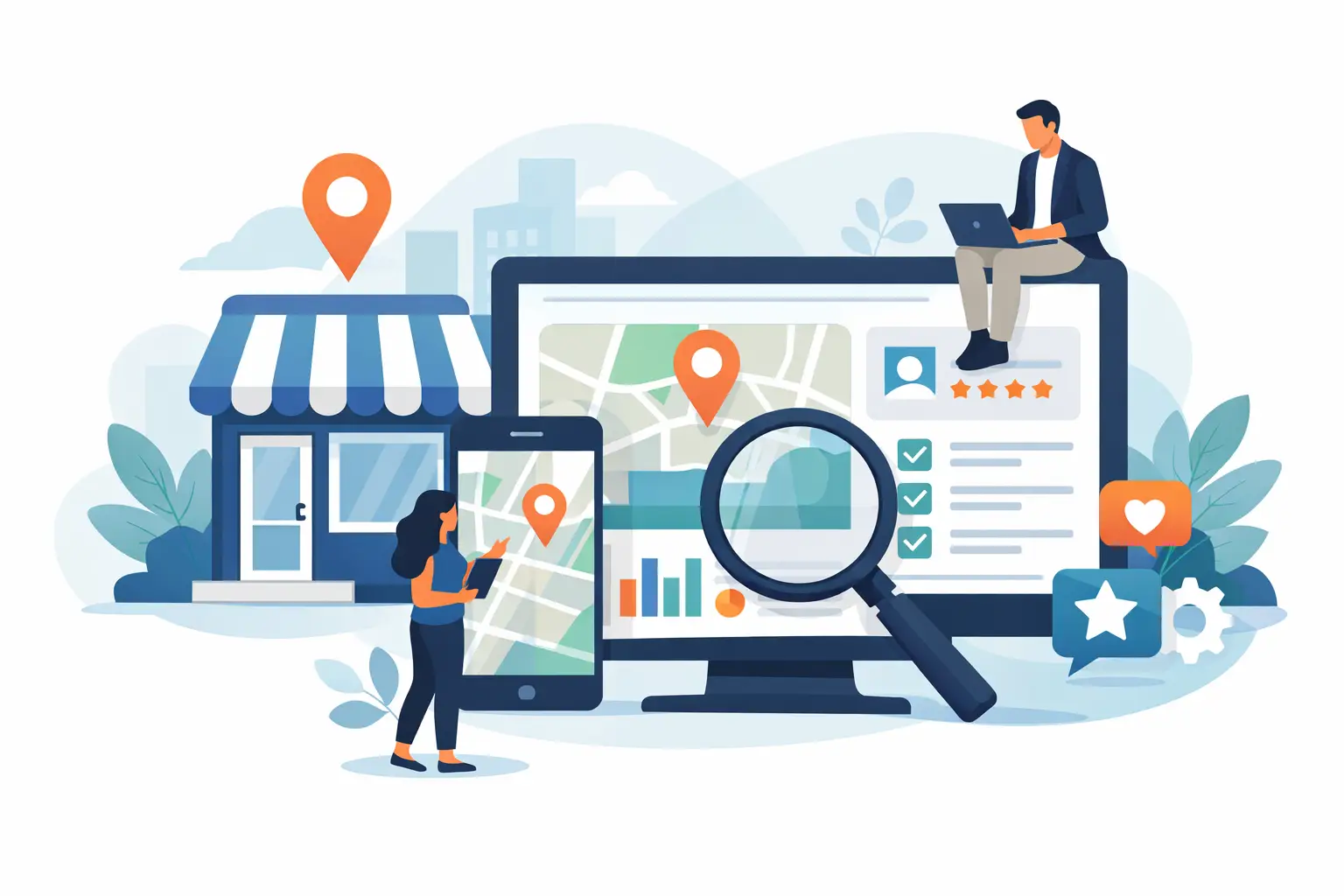
A customer is standing on your sidewalk, phone in hand, trying to answer a simple question: Are you open right now? If your hours are wrong, your address is outdated, or your business name shows up three different ways online, that sale can disappear before the customer ever opens the door. That is why business listing management for small businesses matters so much, especially for independent shops, restaurants, and neighborhood service providers that cannot afford to be overlooked.
For small business owners, listings are not just digital placeholders. They are often the first impression, the quick fact check, and the deciding factor between a visit and a scroll past. Big brands can absorb missed opportunities with massive ad budgets. Local businesses usually cannot. When your information is accurate and consistent across directories, search platforms, maps, and local discovery sites, you make it easier for people to choose you with confidence.
What business listing management for small businesses really means
At its core, business listing management means keeping your key business details correct, consistent, and up to date wherever people look for local businesses online. That includes your logo, business name, address, phone number, website, hours, categories, photos, and service details. It also includes claiming profiles so no one else controls your business’s story.
For a small business, this work carries extra weight. Independent businesses often compete against chains with stronger name recognition and larger digital teams. A well-managed listing helps level the field a little. It tells search engines and customers the same thing at the same time: this business is real, active, local, and ready to serve.
The goal is not to be everywhere just for its own sake. The goal is to be accurate where your customers already check. That might be maps, local directories, industry-specific sites, or community-first platforms where people intentionally look for independent businesses.
Why bad listings cost more than most owners think
Most listing problems look small on the surface. A missing suite number. Old holiday hours. A phone number from two years ago. But local search works on trust, and those small errors add up fast. Imagine if they were all correct? You’d look more reliable, more authoritative, and you’d show up in more searches. That’s why bad listings cost business owners much more than they might initially think.
The psychological impact of outdated or incorrect information
Not only do inaccurate or outdated listings affect a business’s visibility and credibility, but they can also negatively impact potential customers’ perceptions. When someone is searching for a specific product or service, they rely heavily on information from search engines and online directories. If that information is incorrect or incomplete, it creates confusion and frustration for the customer, leading them to question the business’s reliability. This can result in lost trust and potentially lost customers.
A customer who gets bad information may not give you a second chance. They may drive to a competitor, book with someone else, or assume you have gone out of business. Search platforms can also lose confidence in inconsistent business data, which can weaken your visibility over time.
There is also a reputation issue. If your listing has outdated photos, no description, and unanswered questions, while a nearby competitor looks polished and up to date, customers will make assumptions. They do not just compare products or prices. They compare signs of attention and care.
Local businesses built on relationships matter. Your place has a story. Your listing should not make you look invisible, disorganized, or less trustworthy.
The details that matter most
Not every listing field carries the same weight, but several deserve close attention. Your business name should match across platforms and reflect your real-world branding. Your address and phone number should be identical wherever possible. Hours need regular review, especially around holidays, seasonal changes, and special events.
Categories matter more than many owners realize. If you choose categories that are too broad, you can miss relevant searches. If you choose categories that are too narrow or inaccurate, you can confuse both platforms and customers. Photos also play a major role. People want to see your storefront, products, team, menu, or work before they decide.
And then there is your logo. It is worth pausing here because the logo is often underestimated. It is not just a graphic—it is the visual shorthand for everything your business stands for. When someone sees your logo consistently across your website, your storefront, and your listings, something quiet but powerful happens: trust builds. Recognition deepens. The logo becomes a kind of promise. When that logo is missing, low-resolution, or different from one platform to the next, it introduces doubt—however subtle—into the customer’s mind. For a small business, where every impression counts, that inconsistency can cost more than you might expect.
Descriptions should sound human and specific. A good listing description tells people what you do, who you serve, and what makes your business local and worth choosing. It should not read like a generic ad. It should sound like your business.
Where small businesses usually get stuck
Most owners do not ignore listings because they do not care. They ignore them because they are busy running the business. The same person might also handle payroll, answer phones, order inventory, open the shop, and post on social media. Listing cleanup slips down the list.
Another common issue is fragmentation. A business may move locations, change hours, update branding, or switch phone systems, and old data keeps circulating online. Sometimes duplicate profiles appear. Sometimes an old employee set up an account, and no one knows the login. Sometimes a platform auto-generates a listing with incomplete information.
This is where business listing management for small businesses becomes practical rather than theoretical. It is not about chasing perfection. It is about reducing confusion so customers can find the right information quickly and act on it.
4 Steps to Managing and Maintaining Your Business Listings
Your business listings are often the first thing a potential customer encounters—before your website, before your reviews, before any conversation with your team. And yet, they’re frequently overlooked. Consider this: 62% of consumers say they would avoid a business altogether if they found incorrect information online (BrightLocal, 2023). That’s a significant number of people walking away before you even had the chance to earn their trust.
Managing your listings well isn’t just a technical exercise. It’s a reflection of how much you respect your customers’ time—and your own credibility. Here are four steps to help you get it right.
Step 1: Create a Single Master Record
Before you can manage your listings effectively, you need a single source of truth to work from. Think of it as your business’s identity document—the version of your information that is always correct, always up to date, and always the reference point for everything else.
Your master record should include:
- Business name — exactly as you want it to appear everywhere, with consistent formatting and spelling
- Physical address — including suite numbers, floor numbers, or any detail that helps customers find you
- Phone number — one primary number, formatted consistently
- Website URL — including the exact format (with or without “www”)
- Business hours — for every day of the week, including public holidays
- Short description — a concise summary of what your business does (typically 150–300 characters)
- Long description — a more detailed overview for platforms that allow it
- Business categories — primary and secondary categories relevant to your industry
- Logo — a high-resolution version of your current logo, formatted for digital use. This is not a detail to overlook. Your logo is often the first visual signal a customer receives, and it needs to be consistent, clear, and recognizable wherever it appears. A pixelated or outdated logo quietly undermines trust, while a sharp, consistent one reinforces that your business is active, intentional, and worth choosing
- Photos — a cover image and at least a handful of interior/exterior or product photos
- Social media handles — all active profiles, correctly linked
Keep this document somewhere accessible—a shared Google Doc or spreadsheet works well—so it can be updated quickly whenever something changes.
Step 2: Search for Your Business as a Customer Would and Audit Existing Listings
Put yourself in your customer’s shoes for a moment. What do they actually see when they search for your business? The answer might surprise you.
Start your audit by searching your business name on Google, then expand to other platforms. Here’s what to look for:
- Duplicate listings — multiple entries for the same location can confuse both customers and search engines
- Outdated information — old phone numbers, previous addresses, or incorrect hours that were never updated
- Inconsistent NAP data — small discrepancies in your Name, Address, or Phone number (even formatting differences) can undermine your local search rankings
- Missing or low-quality photos — blurry, outdated, or absent images create a poor first impression
- Unclaimed listings — directories and platforms that have auto-generated a listing for you, which you haven’t yet taken ownership of
- Incorrect business categories — being listed under the wrong category means appearing in irrelevant searches
- Unanswered reviews or questions — a visible sign of disengagement that erodes trust
Platforms worth checking include Google Business Profile, Apple Maps, Bing Places, Yelp, Facebook, and any industry-specific directories relevant to your field.
Step 3: Focus on the Listings That Matter Most for Your Audience
Not every directory deserves equal attention—and spreading yourself too thin often means nothing gets done well. Prioritize the platforms where your customers are most likely to find you.
Consider the following when deciding where to focus:
- iLocal Mainstreet — a business directory listing only local businesses, including their names, addresses, hours of operation, and contact information. It is a popular platform for customers looking for specific products or services in their area.
- Google Business Profile — non-negotiable for almost every business; it directly influences your visibility in local search results, and Google Maps, and Google itself notes that customers are 2.7x more likely to consider a business reputable when it has a complete profile.
- Apple Maps — increasingly important, particularly for iOS users.
- Bing Places — often overlooked, but worth maintaining for completeness.
- Yelp — particularly valuable for restaurants, hospitality, and service-based businesses.
- Facebook — important if your audience is active on social media and uses it to discover local businesses.
- Industry-specific directories — think TripAdvisor for hospitality, Houzz for home services, Healthgrades for healthcare providers, or Avvo for legal professionals.
- Local directories — chamber of commerce listings, local business associations, or city-specific directories that carry weight in your community.
Start with the platforms that have the most visibility and traffic for your specific industry and location, and then work outward from there.
Step 4: Build a Simple Maintenance Routine
Even the most accurate listings drift out of date. Hours change, phone numbers get updated, new photos are taken, and promotions come and go. A simple, recurring maintenance routine is the most reliable way to stay on top of it all.
Here’s what a practical routine looks like:
Monthly check-in:
- Review your listings on your primary platforms for any user-suggested edits (Google allows these, and they can go live without your approval)
- Check for new reviews and respond to them—both positive and negative
- Confirm that your hours, contact details, photos, and logo are still accurate and up to date
Before public holidays:
- Update your holiday hours well in advance—at least two weeks ahead
- Add a post or update on Google Business Profile to inform customers of any closures or special hours
Before promotions or campaigns:
- Ensure your listings reflect any relevant offers, updated descriptions, or new photos tied to the campaign
- Check that your website URL is correct and directs customers to the right landing page
After any business changes:
- Update all listings immediately following a relocation, rebrand, phone number change, or significant shift in services
- If your logo has been refreshed as part of a rebrand, treat this as a priority update—your logo anchors your visual identity, and an outdated version left on key platforms can create a confusing disconnect between your old brand and your new one
- Return to your master record first, update it, and then cascade those changes across all platforms
The goal isn’t perfection—it’s consistency. A simple routine, practiced regularly, will do far more for your business than an occasional deep dive.
Managing your listings is, in many ways, an act of showing up—reliably, accurately, and with your customers’ needs in mind. If you’re ready to take a more intentional approach to your local presence, start with your master record today. The rest will follow.
Why local-first directories deserve a place in your strategy
Not every directory serves independent businesses equally. On broad platforms, small businesses often sit beside big-box competitors with deeper budgets and stronger brand recall. That can make local discovery feel stacked against the very businesses that give a neighborhood its character.
That is why local-first listing platforms can be so valuable. They help shift attention back to community-based businesses and make it easier for customers to find neighborhood options on purpose, not by accident. If a platform is built to champion local merchants, your listing does more than improve search visibility. It is also helping customers direct their spending toward the businesses that keep a community distinct and alive.
This is one reason why a platform like iLocal Mainstreet fits naturally into a small-business visibility plan. It supports discoverability, but it also reflects something many owners care deeply about: being seen as part of the local fabric rather than buried beneath national chains.
Good listing management supports more than search
Strong listings do more than help you show up in results. They support trust, foot traffic, calls, bookings, and word of mouth. They also make other marketing work better.
If someone hears about your business from a friend, sees you at a community event, or notices your storefront while driving by, they will often look you up before visiting. Your listing becomes the bridge between awareness and action. If that bridge is weak, your offline efforts leak value.
There is also a compounding effect. Accurate listings—complete with a consistent logo, up-to-date photos, and accurate details—can increase review volume, strengthen local relevance, and create a more reliable brand presence across channels. None of that replaces good service or a strong product. But it helps those strengths get found.
The trade-off: DIY vs. getting help
Some owners can manage listings themselves with a little structure. If you have a single location, stable hours, and only a handful of key platforms, a do-it-yourself approach may be enough. The upside is control and low cost.
But if you are juggling multiple locations, dealing with duplicates, or constantly updating seasonal information, manual management can become frustrating fast. In that case, support tools or managed help may save time and reduce errors. The right choice depends on your bandwidth, not just your budget.
What matters is consistency. A simple system maintained regularly usually beats an ambitious plan that gets abandoned after a month.
Make your business easier to choose
People want to support small businesses. They want the coffee shop with personality, the family-run restaurant, the neighborhood florist, the repair shop that remembers their name. But they also want clear information, easy discovery, and confidence that the trip will be worth it.
Business listing management for small businesses is one of the clearest ways to meet customers halfway. It helps your business show up truthfully, professionally, and locally wherever people are already looking. And for independent businesses, being easy to find is not a small thing. It is part of being able to compete, be chosen, and stay rooted where you belong.
Take a little time to clean up the details. Your next customer may already be searching for you.