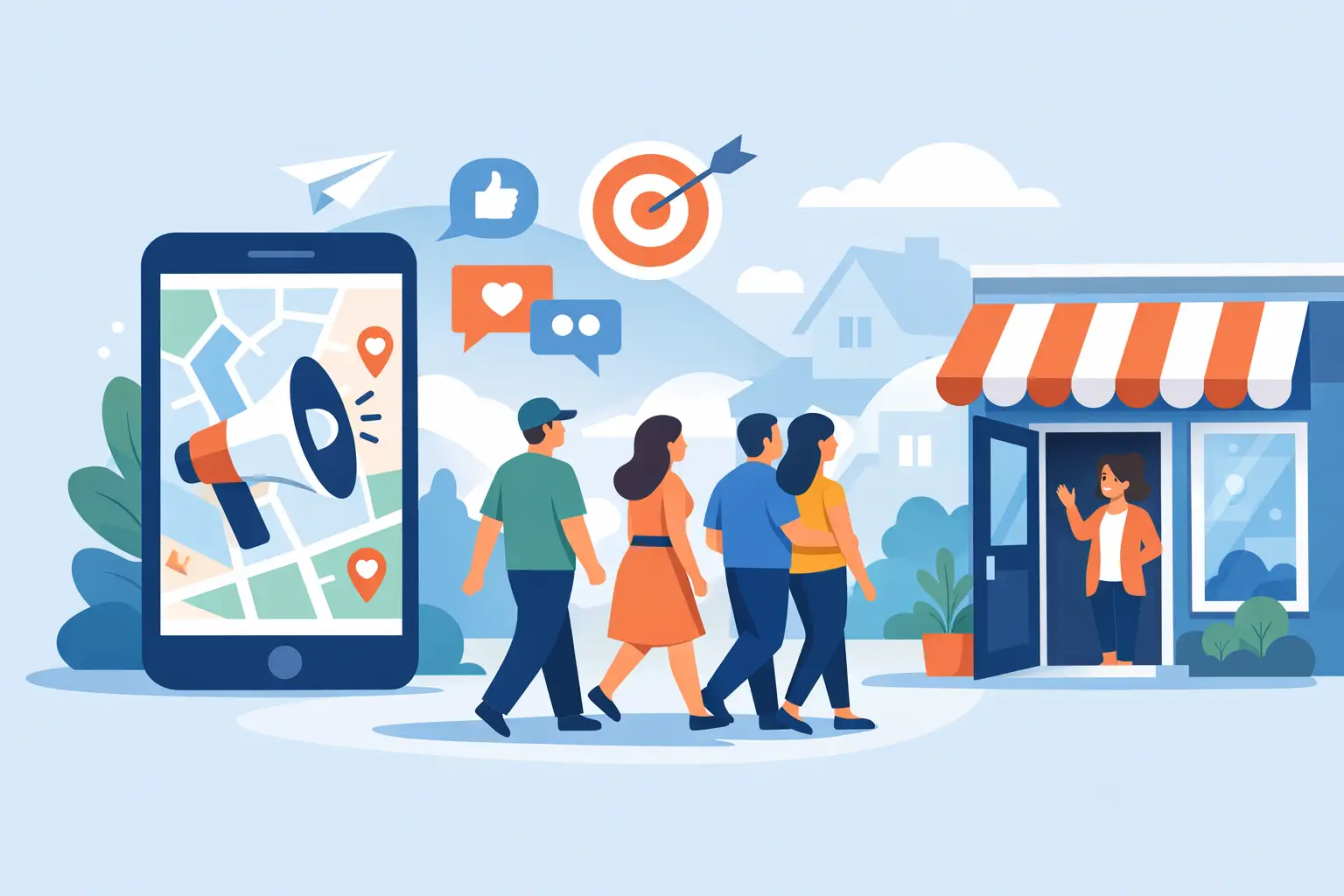
A family looking for Friday night dinner, a new homeowner needing a plumber, a shopper searching for a thoughtful gift – these are not abstract impressions. They are neighbors ready to spend money close to home. Local advertising helps your business show up at the moment that choice is being made, before a national chain or giant marketplace takes the sale by default.
For an independent business, visibility is more than a marketing metric. It is the chance to share what makes your place worth choosing: the people behind the counter, the care in your work, the history on your block, and the service customers remember. Your place has a story. The right local strategy helps more people hear it.
Local advertising is about being easy to choose
A small business does not need to be everywhere. It needs to be visible in the places local customers actually look and in the moments when they are ready to act. That might mean a search for “bakery near me,” a neighborhood Facebook group asking for a recommendation, a community event, or a directory built around independent businesses.
The strongest local advertising does two jobs at once. It makes your business easy to find, and it gives people a reason to feel good about choosing you. Price matters, of course. So do convenience, hours, and location. But independent businesses have something large competitors cannot manufacture: real connection to the neighborhood.
That connection should not be treated as a vague feeling. It is a business advantage. A regular customer may bring a friend. A customer who appreciates your service may leave a review. A parent who discovers your shop may return for years. Local visibility creates the first visit; genuine service creates the relationship.
Start where customers are already searching
Before spending heavily on ads, make sure your business information is accurate and complete wherever people may discover you. Your name, address, phone number, website, hours, categories, services, and photos should tell the same clear story across your online presence. A wrong phone number or outdated closing time can cost a sale just as surely as an ad that never ran.
Your business profile should answer the practical questions quickly. What do you sell or provide? Where are you located? Who do you serve? What makes you different? A restaurant can mention signature dishes, takeout options, and dietary choices. A repair business can name its service area and specialties. A boutique can show the kinds of products customers will find inside.
Photos matter because local customers want reassurance before they visit. Show the storefront so people recognize it from the street. Show your team, your work, and the details that make your business feel welcoming. Skip overly polished stock images when possible. The goal is not to look like a corporation. The goal is to help a neighbor picture themselves walking through your door.
A claimed and well-managed listing on a local-first directory can be especially valuable for businesses that are tired of being placed beside big-box competitors. iLocal Mainstreet gives independent businesses a place to be discovered on their own terms, alongside other community-based merchants rather than faceless chains.
Make local advertising sound as if it comes from here
Generic marketing language gets ignored. Neighborhood-specific language gets noticed because it signals that you understand the people you serve. Mention the community events you support, the nearby landmarks that help people find you, or the seasonal needs your customers share. A garden center can speak to spring planting in its region. A café can promote a warm drink before the town parade. A service provider can remind customers to prepare for local weather.
This does not mean forcing local references into every sentence. It means speaking plainly about the real life around your business. If your shop has served the same families for decades, say so. If you source from nearby makers, explain why. If you offer a service that saves busy neighbors time, make that benefit clear.
Offers can work well, but they should support your long-term value rather than train customers to wait for discounts. A first-visit incentive, a community event special, or a referral thank-you can bring in new faces. Yet many local businesses gain more from promoting a signature product, a helpful service, or a memorable experience. The best message is often not “we are cheapest.” It is “we are nearby, we care, and we do this well.”
Choose channels based on the job they need to do
Different advertising channels are useful for different moments. Search visibility is powerful when someone needs an answer now, such as an emergency repair or a place to eat nearby. Social media can keep your business top of mind between visits and give customers a reason to share your work. Community newsletters, event sponsorships, and local publications can build recognition with people who may not be searching yet.
Print can still have a place, especially for businesses serving a defined neighborhood or an audience that values local publications. A postcard, menu, or event flyer can be effective when it has a clear purpose and reaches the right households. The trade-off is measurement: it is often harder to know exactly which piece prompted a visit unless you use a specific offer or ask customers how they found you.
Paid digital ads can be useful, but they are not automatically the best first move. They work best when your basics are already in place, and you have a clear audience, geographic area, and action in mind. Sending paid traffic to an incomplete profile, unclear website, or outdated business listing wastes money. Start with a modest budget, test one message at a time, and give the campaign enough time to show a pattern.
For many businesses, the most effective mix is simple: a strong local listing, an active presence where customers ask for recommendations, occasional paid promotion for priority services or events, and consistent participation in the community you serve. You do not need to chase every platform. You need a plan you can maintain.
Measure the actions that lead to real business
Likes and views can be encouraging, but they do not always pay the bills. Look for signs that local advertising is leading people toward a visit, call, order, or appointment. Track phone calls, direction requests, online bookings, coupon redemptions, form submissions, and foot traffic when possible.
There is also a low-tech method that works surprisingly well: ask. Train your team to casually ask new customers, “How did you hear about us?” Keep a simple tally for a month. You may find that a local directory, a customer referral, an event, or a sign outside your door is doing more than the channel that gets the most attention online.
Give each effort a fair test. A single social post rarely changes a business, while repeated visibility can build recognition over time. At the same time, do not keep spending on something simply because you have already invested in it. If a message is not bringing the right customers after a reasonable trial, adjust the offer, audience, or channel.
Build a local plan you can keep showing up for
Consistency beats a complicated campaign that disappears after two weeks. Set aside a small, realistic amount of time each month to update your business information, add fresh photos, respond thoughtfully to customer feedback, and promote one timely reason to visit. That rhythm keeps your business visible without pulling you away from the work customers count on.
Think of local advertising as an invitation, not a megaphone. You are inviting neighbors to discover a business with a real stake in their community. Every new customer who walks in, comes back, and tells someone else helps keep more of the neighborhood’s spending, character, and opportunity close to home.