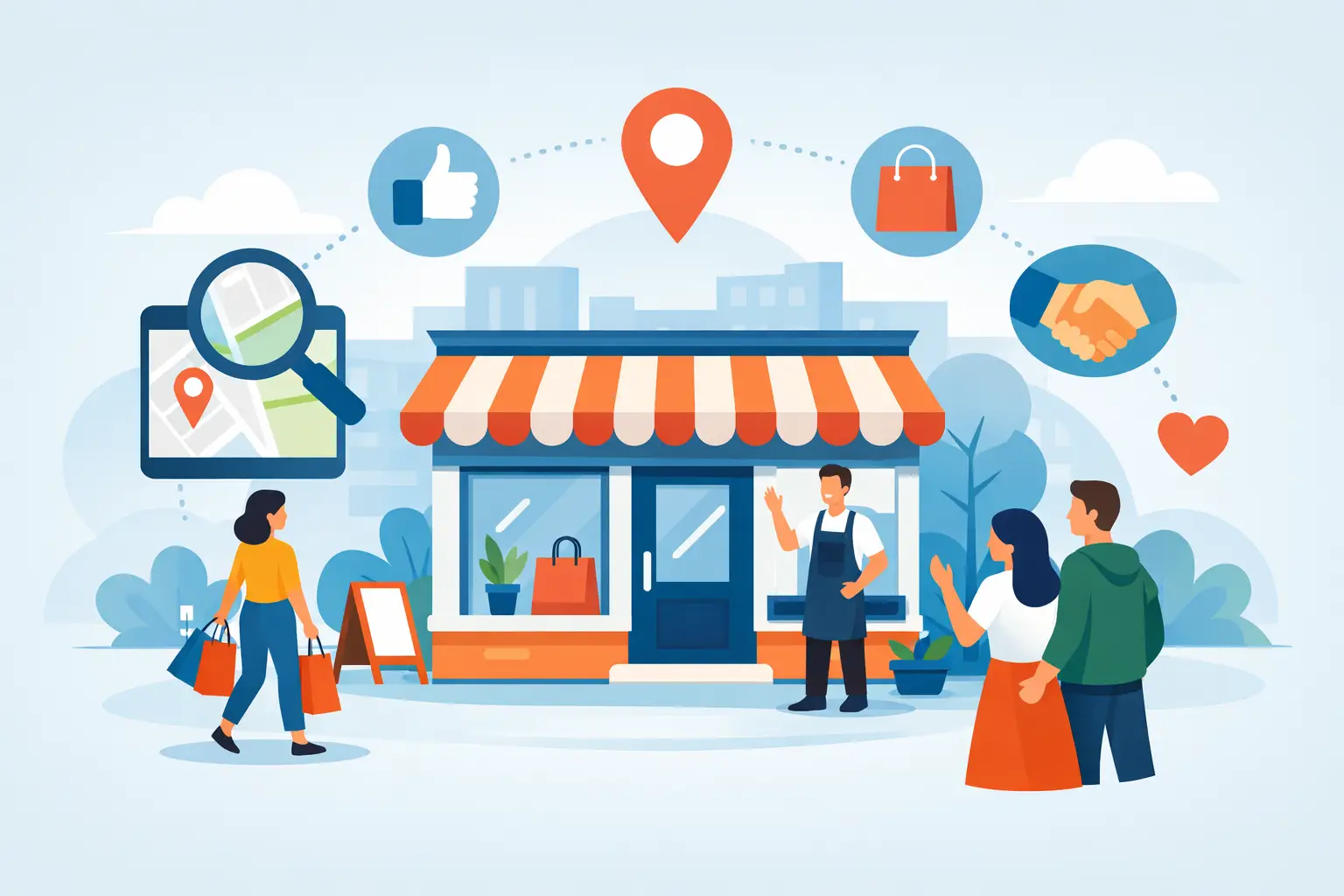
The person walking past your storefront may already be looking for exactly what you sell. They may be searching for lunch, a last-minute gift, a reliable plumber, or a place where someone remembers their name. The challenge is making sure they can find you before a national chain captures their attention. Learning how to attract local shoppers is not about shouting louder than big-box competition. It is about becoming easier to find, easier to trust, and more meaningful to choose.
Independent businesses have an advantage that chains cannot manufacture: a real place in the community. Your customers can meet the owner, see the care behind the work, and spend their money where it helps their own neighborhood. The right local marketing turns that advantage into steady foot traffic and repeat business.
Start by Being Easy to Find Nearby
Local shoppers often begin with a quick search on their phone. They are looking for a business that is open, close, and clearly relevant to what they need. If your hours are outdated, your address is inconsistent, or your business category is unclear, even a wonderful shop can be overlooked.
Claim and complete the online profiles where customers discover local businesses. Use your real business name, current phone number, street address, hours, and a concise description of what makes your business worth visiting. Add fresh photos that show the storefront, the people behind the counter, popular products, finished work, or the atmosphere customers can expect.
Be specific about your offerings. A listing that says “gift shop” is helpful, but “locally made gifts, stationery, candles, and custom gift baskets” gives shoppers a reason to choose you. A restaurant should name its cuisine and highlight details such as outdoor seating, family-friendly service, or a popular house specialty.
A local-first directory such as iLocal Mainstreet can also give an independent business a place to stand out without being buried under big-box stores and faceless chains. Your place has a story. Make sure local searchers can see it.
How to Attract Local Shoppers With a Better First Visit
Visibility gets someone to the door. The experience decides whether they return.
Think about the first five minutes from a shopper’s point of view. Can they tell what you sell from the sidewalk? Is the entrance welcoming? Does someone acknowledge them quickly? Is it simple to find pricing, ask a question, or check out? These small moments carry more weight than expensive advertising because they shape the story customers tell friends afterward.
For a retailer, this may mean a clear window display that changes with the season and a front table featuring easy-to-understand bestsellers. For a service business, it may mean answering calls promptly, explaining next steps plainly, and showing up when promised. For a restaurant or food business, it may mean making pickup instructions obvious and greeting regulars with genuine warmth.
Do not try to appeal to every person who passes by. The strongest neighborhood businesses make their best customers feel seen. A specialty running store can be the helpful place for new runners. A family-owned hardware store can be the place that explains which paint finish works. A salon can be known for listening before recommending. Clarity builds loyalty.
Give People a Reason to Choose Local
Many consumers want to support independent businesses, but convenience can easily win when the local choice is not obvious. Make the value of shopping with you easy to understand without guilt-tripping anyone.
Share the human side of your business. Tell customers how long you have served the neighborhood, what inspired you to open, where you source products, or which local causes matter to your team. A short sign at the register, a post featuring a maker, or a simple note in your email updates can make the connection real.
This is not about turning every purchase into a grand statement. It is about reminding shoppers that their dollars have a destination. When they buy a birthday cake from a local bakery, hire a neighborhood electrician, or choose a nearby boutique for a gift, they are helping keep skills, jobs, and character close to home.
Still, community values alone will not carry the whole sale. Shoppers also expect quality, fair pricing, and dependable service. Lead with the practical benefit, then let your local story give the choice more meaning.
Build Relationships Beyond the Transaction
A discount can bring in a first-time customer. A relationship brings them back.
Train your team to learn names when it feels natural, remember preferences, and offer useful help rather than a sales pitch. Ask a regular how their project turned out. Save a customer time by setting aside an item they mentioned. Thank people for returning. These gestures are simple, but they are difficult for a distant marketplace to replicate.
Give customers a reason to stay in touch after they leave. Invite them to receive occasional updates about new arrivals, seasonal menus, appointments, classes, or community events. Keep those messages useful and modest. If every email is a hard sell, people tune out. If it helps them plan a weekend, solve a problem, or find a thoughtful gift, they will welcome it.
Reviews matter here, too. Ask satisfied customers for an honest review while the good experience is fresh. Never pressure them or offer incentives for positive feedback. A steady collection of real reviews reassures local shoppers that your business is active, trustworthy, and worth the stop.
Be Present Where Your Community Already Gathers
You do not need to sponsor every event in town. Choose opportunities that fit your business and put you in genuine contact with the people you hope to serve.
A bookstore might host a local author night. A restaurant might participate in a downtown tasting event. A pet groomer could support an adoption day. A home services company might offer a practical workshop at a neighborhood fair. The goal is not simply to get your logo on a banner. It is to create a useful, memorable interaction.
Partnerships with other independent businesses can stretch a small marketing budget further. A florist and bakery can create a Mother’s Day package. A fitness studio and juice bar can share a neighborhood wellness event. A gift shop can feature products from local makers and introduce each other’s audiences.
Choose partnerships carefully. The best ones serve the same community without forcing a fit. When the connection feels natural, customers experience it as local businesses looking out for one another, not as a marketing gimmick.
Make Your Storefront and Offers Worth Noticing
Local foot traffic is often won or lost before someone walks inside. A clean sign, visible hours, good lighting, and an inviting window make a practical difference. If your business is inside a plaza or off a main road, add clear directional details to your online profiles and consider signage that helps first-time visitors feel confident they are in the right place.
Give people timely reasons to stop in. Seasonal products, limited menu items, neighborhood-only specials, classes, demonstrations, or small appreciation events can create momentum. The offer does not have to be a deep discount. In fact, constant discounting can train customers to wait for a sale and can squeeze already-thin margins.
Instead, offer value that fits your business. A complimentary gift wrap service, a useful bundle, early access for regulars, or a free mini consultation can feel special while protecting the value of your work. Track what brings people in and what they actually buy. A busy event that does not lead to sales or new relationships may not be worth repeating.
Keep Showing Up Consistently
The answer to how to attract local shoppers is rarely one big campaign. It is consistent proof that you are open, active, helpful, and proud to serve your neighborhood.
Set aside a small amount of time each month to check your hours, respond to reviews, update photos, and share what is new. Watch for patterns in customer questions. If people keep asking whether you offer curbside pickup, gift cards, repairs, or a certain product, make the answer easier to find. Your customers are often telling you exactly what would make choosing local more convenient.
Some tactics will work better than others depending on your location, category, and budget. A downtown cafe may benefit most from walk-in visibility and community events. A contractor may rely more heavily on reviews, service-area details, and referrals. The common thread is simple: be present where local people are looking, then give them a reason to return.
Every new customer is an invitation to show what an independent business does best. Welcome them well, solve a real need, and let them leave feeling that their neighborhood is better because your doors are open.