
Independent Shops vs Chains: What Local Wins
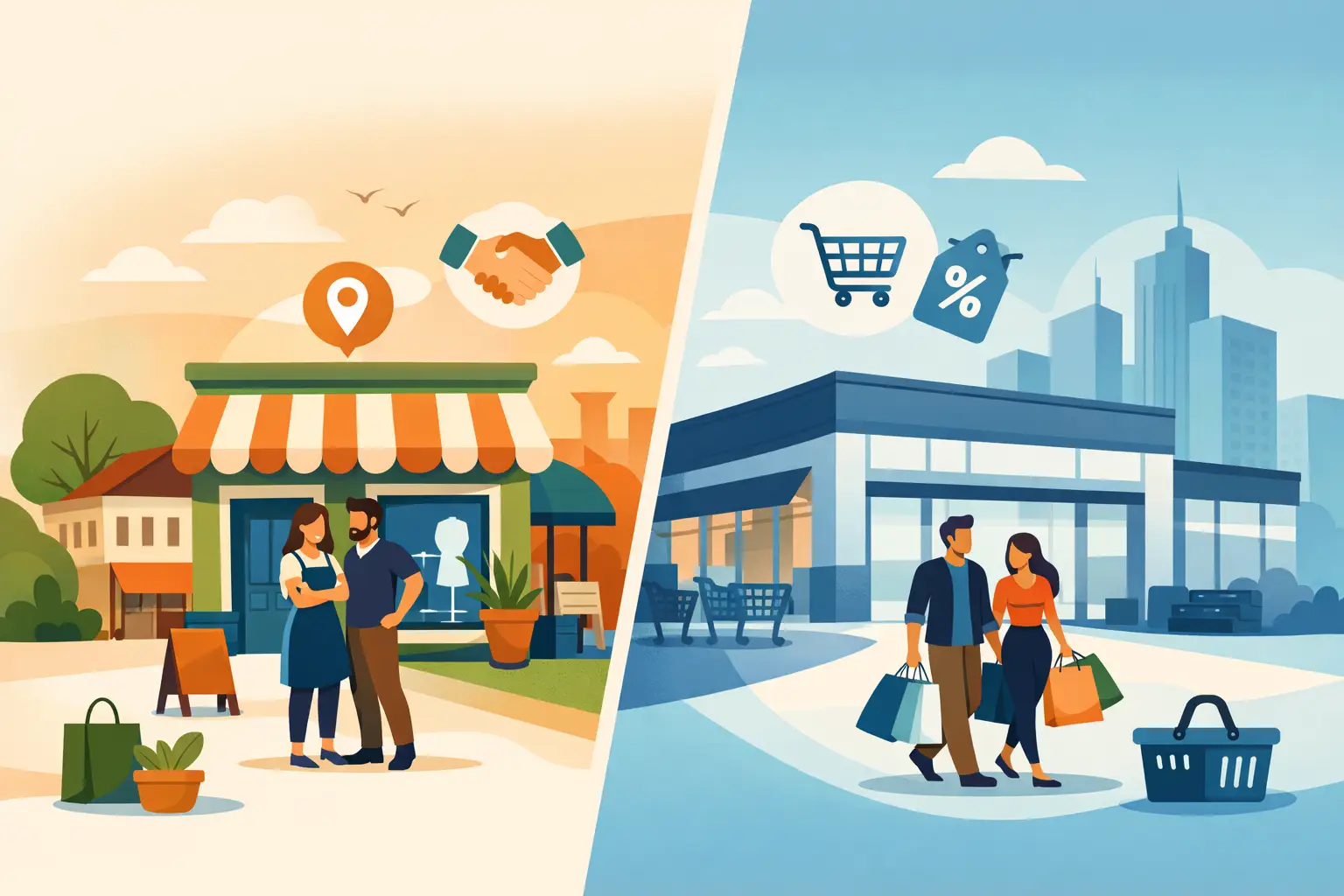
A customer walks into a neighborhood bakery and the owner remembers their usual order. Across town, they may get the same item faster from a national chain, but no one knows their name, their family, or why they are celebrating. That is the real conversation behind independent shops vs chains. It is not simply about where people spend money. It is about what kind of local economy and daily life that spending helps create.
For independent business owners, the comparison can feel uneven. Chains often have national advertising budgets, recognizable logos, bulk purchasing power, and prime placement in search results. Yet local businesses carry strengths that cannot be copied from a corporate playbook: expertise rooted in place, real relationships, flexibility, and a story customers can feel proud to support.
Independent Shops vs Chains: The Difference Goes Beyond Price
Chains are built for consistency at scale. A customer can expect a familiar menu, layout, return policy, or product assortment whether they are in Phoenix, Pittsburgh, or Portland. That predictability has value, especially for people who are short on time or need a specific item right away.
Independent shops operate differently. A local bookstore can stock titles its neighborhood is talking about. A family-owned restaurant can adjust a dish after hearing regulars ask for it. A auto repair shop can explain what is actually wrong, rather than push a standard replacement. These businesses are often closer to their customers because the owner is not several layers removed from the decision.
That closeness creates a different kind of value. It may not always mean the lowest advertised price, the largest inventory, or late-night hours. It can mean better guidance, more thoughtful selection, and service shaped by the people who walk through the door each week.
The goal is not to pretend chains have no place. National businesses provide jobs, convenience, and familiar options. The problem comes when they become the default choice simply because local alternatives are harder to find. A neighborhood should not lose its independent businesses because visibility was treated as a luxury.
What Independent Businesses Bring to a Community
A local business is rarely just a place to buy something. It is part of the neighborhood’s social fabric. The florist knows which school is holding a fundraiser. The barber hears about a new family moving in. The hardware store helps someone solve a problem before it becomes an expensive repair.
Independent owners also tend to make decisions with local consequences in mind. They hire nearby, use local vendors when they can, sponsor youth teams, donate gift cards for raffles, and show up when a community needs support. Every business has different capacity, of course, and no owner should be expected to carry the whole neighborhood on their shoulders. Still, local ownership keeps more decisions close to home.
There is an economic reason this matters, too. Money spent with independent businesses is more likely to circulate through local wages, services, suppliers, and community organizations. A single purchase may seem small, but repeat choices add up. When residents choose a local restaurant for lunch, a neighborhood contractor for a project, or a nearby gift shop for a birthday, they help preserve the variety that makes a place worth living in.
A strong Main Street is not built by nostalgia. It is built by enough customers discovering, trusting, and returning to the businesses already doing the work.
The Advantages Chains Can Offer
An honest comparison has to recognize why chains attract customers. Their scale can support lower prices on certain items. Their inventory systems may make it easier to find standardized products. Many have broad hours, polished apps, established rewards programs, and marketing that keeps their name top of mind.
For a small business owner, these advantages are not a reason to imitate every corporate tactic. Trying to compete on every price point or every convenience feature can drain time and margin. Instead, it helps to be clear about where your business is genuinely better.
Maybe your advantage is a carefully chosen product line, not endless shelves. Maybe it is a faster answer from a real person, a repair done right the first time, or a menu that reflects the neighborhood rather than a national test market. Maybe your customers appreciate knowing that their purchase supports a family who lives nearby. Those are not soft benefits. They are reasons people return.
The best local businesses pair that human advantage with practical access. Accurate hours, current contact information, clear categories, photos, and a simple explanation of what you offer make it easier for someone to choose you when they are searching nearby.
Visibility Is Part of Competing Fairly
A wonderful local business cannot serve people who do not know it exists. This is where many independent owners face the real challenge. They may have loyal customers and a strong reputation offline, yet appear buried beneath sponsored results, large marketplaces, and familiar chain names online.
Visibility is not vanity. It is the modern version of having a clear sign on the street, a welcoming storefront, and a spot in the local conversation. When your business information is incomplete or inconsistent, a potential customer may assume you are closed, too far away, or not what they need. Often, they choose the chain because it was easier to verify.
Start with the basics. Claim and manage your business profile wherever local customers search. Use the name, address, phone number, website details, hours, and categories consistently. Describe your specialty in plain language. A customer searching for “bike repair,” “gluten-free bakery,” or “family photographer” should quickly understand whether you are the right fit.
Then give your listing a human voice. Explain what makes your place special. Mention the neighborhood you serve, the services you are known for, or the experience customers can expect. Your place has a story, and that story is often the difference between a quick scroll and a first visit.
Platforms designed around local discovery can help level the field. iLocal Mainstreet gives independent businesses a place to be found without placing big-box stores and faceless chains at the center of the experience. For owners, that means a clearer opportunity to reach people who are actively looking to spend locally.
How Local Businesses Can Turn First Visits Into Loyalty
Getting discovered is the beginning, not the finish line. Independent shops have an opportunity chains work hard to manufacture: authentic connection. The key is to make that connection reliable, not accidental.
Customers notice when a business follows through. Keep hours current. Answer questions promptly. Make the first visit easy for someone who has never been there before. If you offer appointments, delivery, pickup, repairs, custom work, or accessibility accommodations, say so clearly. Small details reduce uncertainty and make people more likely to choose a local option.
It also helps to invite customers into the life of the business. Share the reason behind a new product, celebrate a team member, thank the community after a busy season, or recognize another neighborhood organization. This should never feel forced. Simple, honest communication is enough. People want to support places that feel real.
Loyalty is earned through consistency, but it is strengthened through recognition. A regular may return because the coffee is good. They may tell a friend because the staff made them feel welcome. That word-of-mouth trust is one of the most powerful advantages an independent business can build.
A Better Choice Starts With Being Findable
Consumers do not have to make every purchase locally for their choices to matter. Convenience, budget, availability, and personal needs are real. But when a local option is a fit, choosing it can keep a neighborhood more distinctive, more connected, and more resilient.
For business owners, the work is not to apologize for being smaller. It is to make your value visible. Be easy to find, clear about what you do, and proud of the role you play in your community. The next person looking for exactly what you offer may be only a search away – and they may become the regular who helps your story continue.
RECENT BLOG POST
