
The Economic Impact of Shopping Local in Towns
A dollar spent at a neighborhood bakery, repair shop, restaurant, or family-run boutique does more than complete a purchase. The economic impact of shopping local can show up in the paycheck of a nearby employee, the order placed with a regional supplier, and the tax revenue that supports the streets, parks, and services people use every day.
For independent business owners, this is personal. Your place has a story, and every customer who chooses your business is helping keep that story – and the neighborhood around it – alive. For shoppers, choosing local is one practical way to turn everyday spending into a stronger community.
Where a Local Dollar Goes
When someone shops with an independent business, more of that money tends to stay close to home. A local owner is more likely to hire nearby residents, work with local accountants and printers, order from regional vendors, sponsor a school team, or donate to a community fundraiser. Those payments create additional activity beyond the original sale.
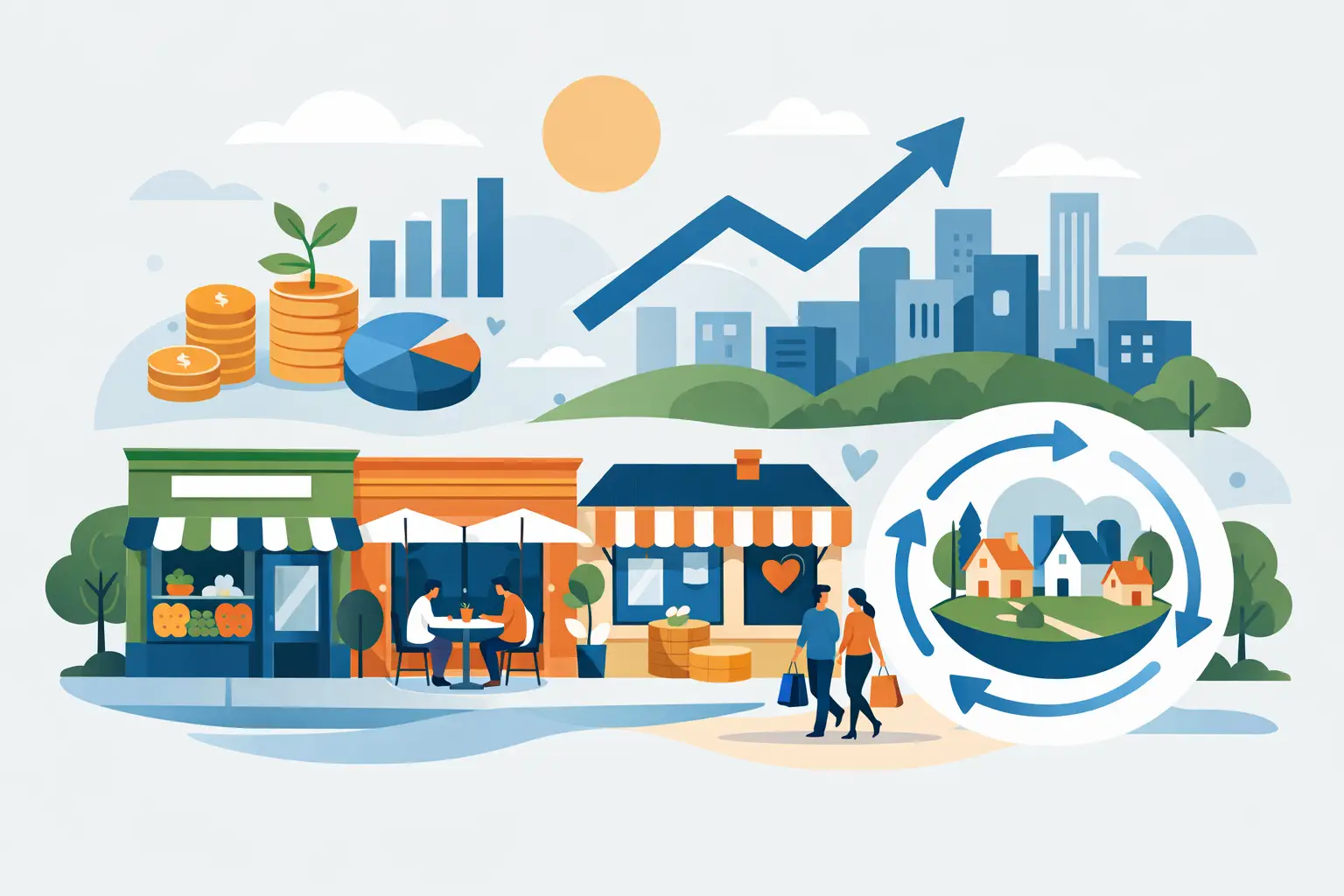
Economists often describe this as a local multiplier effect. The exact amount varies by industry, location, and business model. Still, the principle is easy to see: money that circulates among local people and businesses can keep creating value before it leaves the area.
A neighborhood coffee shop, for example, may use a customer’s purchase to pay a barista, buy pastries from a nearby baker, hire a local technician to fix equipment, and purchase supplies from a regional distributor. Each decision supports another business or household. A national chain may employ local people too, but major decisions, profits, purchasing contracts, and marketing budgets are often managed elsewhere.
That distinction matters. Local spending is not only about who receives the first dollar. It is about how many times that dollar can support the community afterward.
The Economic Impact of Shopping Local on Jobs
Small businesses are often major employers in their communities. They create work for cooks, stylists, mechanics, bookkeepers, retail associates, contractors, and many other people whose jobs cannot be moved to a distant headquarters.
Independent businesses also create opportunity in ways that are harder to measure. A first job at a local store can teach customer service and responsibility. A neighborhood restaurant may give an aspiring chef room to grow. A local service business may hire an apprentice who eventually starts a company of their own. These are real economic pathways, not just feel-good stories.
Shopping local does not mean every small business can hire more people immediately. Margins can be tight, especially for restaurants, retailers, and service providers facing rising rent, labor, and inventory costs. But steady local demand gives owners more confidence to add hours, make a hire, invest in training, or keep a valued employee on the schedule during a slow season.
For many towns, the choice is not between a chain and nothing. It is between a Main Street with a mix of employers and services, or one with fewer places for residents to work, gather, and build a livelihood.
Stronger Tax Bases and Better Community Services
Local commerce also support the public side of community life. Sales taxes, property taxes, business fees, and payroll-related revenue can contribute to local budgets, depending on state and municipal rules. That revenue helps fund services such as road maintenance, public safety, libraries, parks, and local programming.
The details differ from one city or county to another, so it would be too simple to claim that every local purchase produces the same public benefit. Online purchases may still generate sales tax. Chains also pay local taxes and employ residents. The real question is broader: what kind of commercial ecosystem is a community building over time?
A healthy mix of independent businesses can fill vacant storefronts, strengthen walkable business districts, and make an area more attractive to residents and visitors. When people can grab lunch, find a gift, book a service, and meet a neighbor without driving across town, a commercial district becomes part of the community’s daily rhythm.
That activity can help protect property values and encourage further investment. It also gives local governments a more diverse base of businesses rather than relying too heavily on a few large employers or retail centers.
Local Businesses Keep Communities Distinct
Economic impact is not only measured in receipts. It is also visible in whether a town still feels like itself.
Independent businesses reflect the people they serve. They carry products a neighborhood actually wants, know regular customers by name, and often respond faster to changing local needs. A bookstore can host local authors. A grocer can stock ingredients for a community’s traditions. A hardware store can recommend the right fix for homes common in the area. These details create a sense of place that big-box formulas rarely replicate.
That local character has economic value. Visitors are more likely to spend time and money in a district that feels memorable rather than interchangeable. Residents are more likely to take pride in an area where they can find familiar faces and one-of-a-kind offerings. A thriving local business scene can become part of why people choose to live, work, and return.
Visibility Is Part of the Equation
People cannot support businesses they cannot find. Many shoppers want to buy local, but convenience still shapes behavior. If a neighborhood merchant does not appear when someone searches for a nearby service, meal, gift, or specialty item, that customer may default to the first large platform or chain they see.
That is why a clear, accurate online presence is no longer optional for most local businesses. Your address, hours, phone number, categories, photos, and description should make it easy for people to understand what you offer and how to reach you. A claimed, current business profile can turn a local search into a local sale.
Platforms such as iLocal Mainstreet are built around that idea: big visibility for small businesses. By focusing on independent businesses rather than big-box stores and faceless chains, local directories can give shoppers a more direct path to the places that make their communities special.
Visibility is not a replacement for great service, fair pricing, or a quality product. It is the invitation that gets a new customer through the door in the first place.
What Local Business Owners Can Do
The economic impact of shopping local grows when customers have a simple reason to choose nearby. That starts with being easy to discover, but it also means making your business’s value clear.
Tell people what makes your business different. Maybe you source locally, offer personal service, carry hard-to-find products, repair rather than replace, or have been serving the neighborhood for decades. Those are not small details. They help customers understand that their purchase supports something real.
Keep your online information current, especially around holidays, seasonal hours, and special events. Encourage satisfied customers to share their experience with friends and neighbors. Partner with nearby businesses when it makes sense, whether that means cross-promoting, hosting an event, or referring customers to each other. A strong local economy is rarely built by one business working alone.
It also helps to meet customers where they are. Some want to browse in person; others need online ordering, appointments, curbside pickup, or a quick phone call. Not every service fits every business, and owners should not chase every trend. Choose the tools that make buying from you easier without creating more work than they are worth.
A Purchase Can Be a Vote for the Kind of Town You Want
No one can shop local for every single need. Price, availability, accessibility, and time all matter. Families have budgets, and business owners understand that better than anyone. Supporting local is not about guilt or perfection.
It is about noticing the available choices. Choose the independent restaurant for dinner once in a while. Call the nearby auto repair business before replacing an item. Buy a birthday gift from the shop downtown. Recommend a trusted local provider when a neighbor asks for help. Those choices add up.
When a community makes room for independent businesses to be seen and supported, it keeps more than storefronts open. It keeps jobs close, ideas moving, and neighborhood stories in motion. Every local purchase is a small, meaningful signal: this place matters, and the people building it deserve to be found.
RECENT BLOG POST
