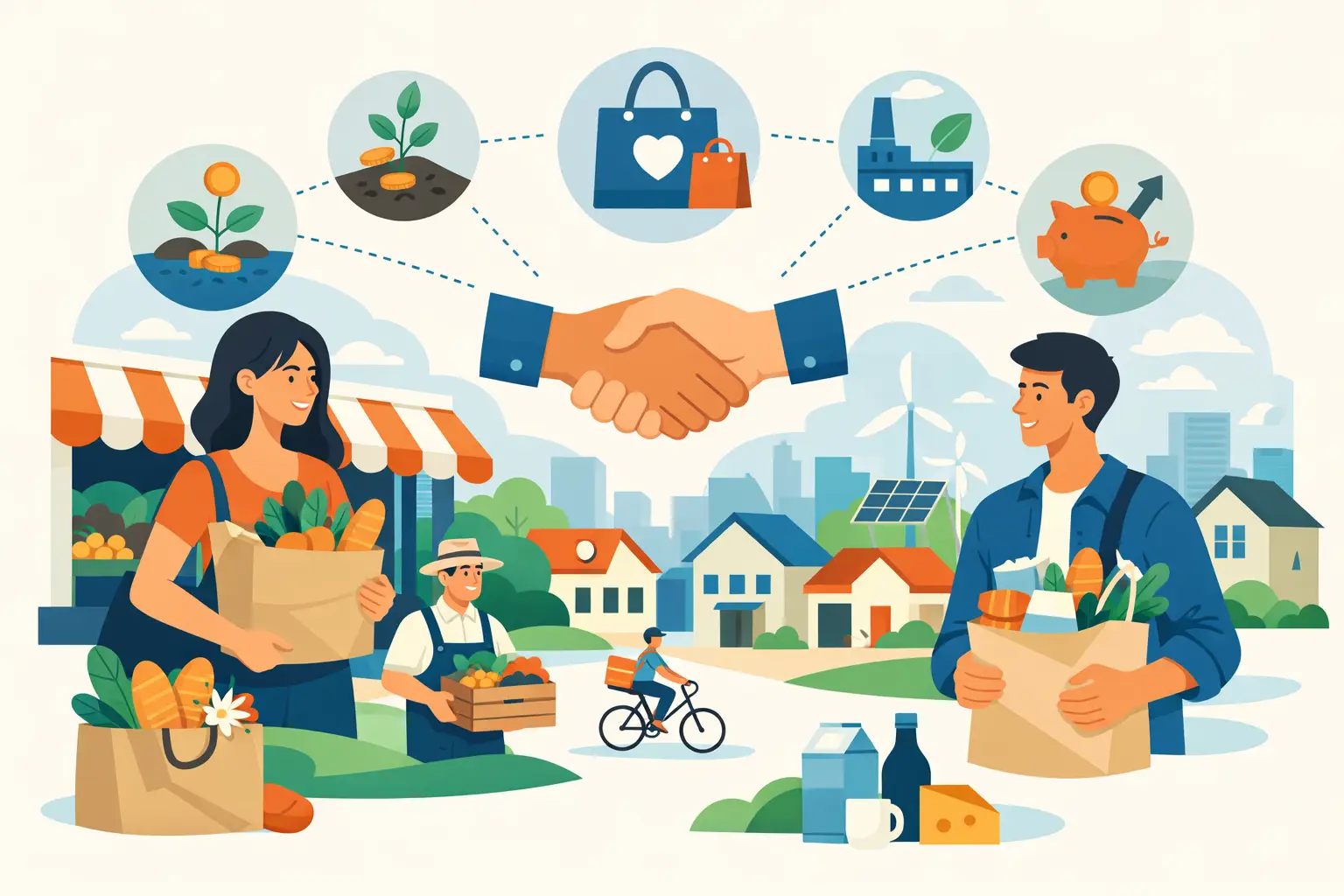
For many people, shopping local is not about rejecting convenience or pretending every independent business can beat a national chain on every price. It is about recognizing value more fully. A purchase at a neighborhood business often yields economic, social, and practical returns that do not appear on a receipt. For small business owners, that reality matters. For consumers, it should.
Why the benefits of shopping local go beyond a single sale
When a local business earns a customer, the impact rarely stops at the register. Independent businesses tend to hire local workers, use local service providers, and spend with other local businesses. A local coffee shop may buy pastries from a neighborhood baker, work with a local accountant, and hire students or residents from nearby blocks. That creates a chain reaction that keeps more dollars circulating close to home.
That local circulation matters because neighborhoods do not thrive on transactions alone. They thrive on relationships, repeat visits, and trust. Big retailers can deliver scale, but small businesses often deliver resilience. They anchor business districts, activate foot traffic, and give people more reasons to stay engaged with the places where they live.
There is also a visibility issue. Independent businesses often compete in a digital space crowded by giant brands with larger ad budgets and stronger search dominance. That means shopping local is not only a buying choice. It is also a visibility choice. Every visit, review, recommendation, and purchase helps a small business stay present and discoverable.
1. Local spending helps keep neighborhoods economically stronger
One of the clearest benefits of shopping local is that more money tends to stay in the community. Local owners are more likely to reinvest in the neighborhood, whether that means hiring local help, maintaining a storefront, or paying other neighborhood businesses for supplies and services.
No single purchase transforms a district overnight, and not every independent business sources everything locally. Still, the pattern is real. When more spending stays close to home, commercial corridors are more likely to remain active rather than hollow out. That affects everything from storefront occupancy to local tax support and community vitality.
For business owners, this is not abstract. A stronger local economy makes it easier for neighboring businesses to survive, and thriving neighbors often become a source of shared foot traffic. One successful block helps the next.
2. Independent businesses create a sense of place
Chains can be familiar. Local businesses are memorable.
The bookstore that hosts kids’ story time, the barber who knows three generations of one family, the restaurant where the owner greets regulars by name – these businesses shape how a town feels. They give a neighborhood identity and make commercial districts worth visiting rather than simply passing through.
That sense of place has practical value. It supports tourism, community pride, and local loyalty. People are more likely to spend time in areas that feel distinctive and alive. For consumers, that means richer experiences. For business owners, it means the local business ecosystem becomes more attractive overall.
3. Customer service is often more personal and more accountable
Anyone who has tried to solve a simple problem through a national call center understands the difference here. At a local business, the person helping you often has direct authority to make things right. The owner may be on site. The staff may know the inventory, the history, and the community well enough to offer real guidance instead of scripted support.
That does not mean every small business automatically provides perfect service. Some are exceptional, some are still improving, and some need better systems. But local businesses usually have a stronger incentive to earn trust because reputation travels fast in a neighborhood. They live much closer to the consequences of their customer experience.
This can be a major advantage for small business owners willing to lean into it. Personal service is not old-fashioned. It is a competitive edge.
4. Shopping local supports real jobs and entrepreneurship
Behind every independent storefront is someone taking a risk. Often, it is a family trying to build something sustainable, an owner-operator creating work for themselves, or a founder investing long hours to serve a community that larger companies may overlook.
When people choose local, they support that effort directly. They also support employees, apprentices, part-time workers, and neighboring providers whose income depends on those businesses staying open.
This matters especially in communities where small businesses are one of the most accessible paths to ownership and economic mobility. Local commerce creates space for people to test ideas, build reputations, and create opportunities rooted in lived community knowledge.
5. Local businesses often offer better-fit products and services
A national chain is built for consistency across many markets. A local business can adapt to one.
That means independent owners are often better positioned to stock products that reflect local tastes, solve local problems, or serve underserved niches. A neighborhood garden center knows what grows in local conditions. A specialty grocer understands the cultural needs of nearby families. A local repair shop knows which issues are common in the area and what customers actually need, not just what is easiest to upsell.
This is one of the less talked-about benefits of shopping local. Relevance saves time. Better recommendations reduce waste. And a business that knows its customers well can often provide a more useful experience than a larger competitor with broader reach but less local insight.
6. Community ties grow stronger when people buy from people they know
There is a social value to local commerce that is easy to overlook until it starts to disappear. Small businesses create informal meeting points. They are where neighbors run into each other, where community flyers still matter, and where local causes get a sign in the window or a donated gift card for a fundraiser.
Those ties do not always show up in economic reports, but they shape daily life. Communities with strong local business networks often feel more connected, more participatory, and more human.
For owners, this means visibility is about more than showing up in search. It is about becoming part of a place’s rhythms. That is one reason platforms like iLocal Mainstreet matter – they help people find the independent businesses that already give neighborhoods their texture and heart.
7. Shopping local can be a more values-driven choice
Many consumers want their spending to reflect what they care about. They want to support neighbors, reward craftsmanship, preserve local character, or avoid feeding systems that make small businesses harder to see and compete.
Shopping local will not be the right choice in every situation. Budgets are real. Availability matters. Sometimes a chain or marketplace is the only practical option. But when people do have a choice, spending locally lets them align convenience with community impact.
That decision can feel small in the moment. Across a year, across a neighborhood, it is not small at all.
8. Independent business districts tend to be more resilient
Communities that rely too heavily on a few large players can become vulnerable when one closes, relocates, or changes strategy. A broader base of small businesses can create a more flexible local economy. If one shop struggles, the whole district does not necessarily collapse.
Small businesses also adapt quickly. They adjust inventory, shift hours, try new services, and respond to customer feedback without layers of corporate approval. That agility can help a neighborhood respond to changing needs faster than larger organizations can.
Of course, resilience is not guaranteed. Small businesses face tight margins, rising costs, and visibility challenges every day. That is exactly why local support matters. It gives independent operators a better chance to keep adapting instead of disappearing.
9. The local choice creates momentum
One of the most practical benefits of shopping local is momentum. A first purchase can turn into a repeat visit. A repeat visit can become a review. A review can help another customer discover a business. Over time, those small actions build awareness and trust that paid advertising alone may not create.
For local consumers, this is a reminder that support is not limited to spending large amounts. Choosing a local lunch spot, booking a neighborhood service provider, or telling a friend about a favorite shop all contribute to the same cycle.
For small business owners, the lesson is just as important. Being easy to find, easy to understand, and easy to trust matters. If your place has a story, people should be able to see it. If your business serves the community well, your online presence should help that service get noticed.
Shopping local is not a sentimental extra. It is one of the most direct ways people can shape the kind of neighborhood they want to live in. Every local purchase signals what deserves to stay visible, viable, and valued. If you want stronger main streets, more independent voices, and a community with real character, start with the next thing you buy.

Author: Drean Martin
My name is Drean and I am a passionate content writer with 10 years of experience in the field. I specialize in creating engaging, SEO-friendly content that helps brands connect with their audience and achieve their goals. I have a knack for crafting compelling narratives and turning even the most complex ideas into simple, digestible pieces. Whether it's blog posts, social media content, or website copy, I bring creativity, precision, and a deep understanding of digital marketing to every project.